How AI Is Changing Programming for Strength Coaches
AI has changed strength programming faster than almost anything else in the last decade of coaching. Writing a program used to be the slow, skilled, billable core of the job. Now a coach can produce a custom block in minutes - and so can the athlete sitting across from them. Both of those facts matter, and most coaches are only paying attention to one of them.
This is not a piece about whether AI is good or bad for coaching. It is here, your clients already have access to it, and pretending otherwise is how you get left behind. This is about what actually changes when programming gets cheap, where AI genuinely helps, where it quietly hurts, and what separates the coaches who win the next few years from the ones who get replaced.
The short version: AI is collapsing the time it takes to write and customize a strength program from hours to minutes. That shift moves the coach’s value away from building the program and toward the coaching itself - the feedback, the adjustments, and the accountability an athlete actually pays for. The coaches who understand this and use the tools will pull ahead. The ones who ignore them will lose to coaches who are worse than them on paper.
What AI lets strength coaches do now
AI has driven the cost of time in programming down to almost nothing. The block that used to take an hour to think through and lay out can now take five to fifteen minutes, depending on the tools you are using. You can iterate faster, build customizations faster, and adjust on the fly without rebuilding from scratch.
That speed changes how you can structure your offerings. When writing the program stops being the expensive part of your week, you stop selling the program and start selling the part that was always the real product: your coaching. Your athlete does not know whether you spent three hours or five minutes writing their block, and they do not care. They care about results, and they care about the attention you give them through feedback and check-ins. AI changed the math on where your time goes, which means it changed your value proposition whether you have noticed or not.
AI also lets you collect and interpret data in ways that used to require a spreadsheet wizard. You can take twelve weeks of an athlete’s training, feed it in, ask a specific question, and get a real answer back. You no longer need a custom-built Excel monster to see what is happening across a training block. You can surface progression, intensity distribution, tonnage trends, and where a lift stalled - then summarize what has been going on with a given client or template in plain language.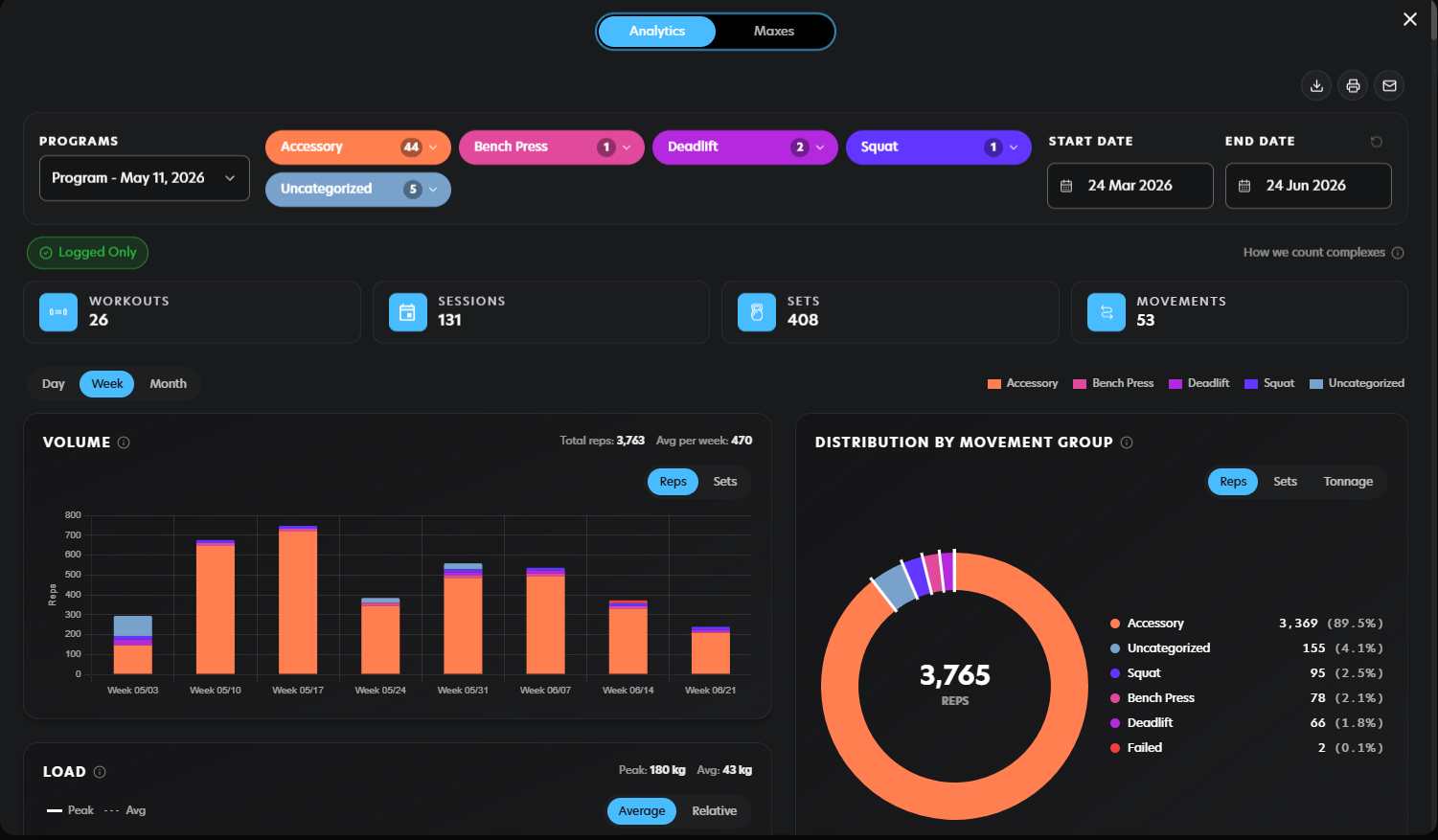
Here is an example prompt a coach could paste into the CoachLogik AI coach - or any AI tool - to get the kind of analysis a strength coach actually needs:
You are analyzing a strength athlete’s training log. Here is the data:
[paste 8 to 12 weeks of logged training]
1. What progression did this athlete make on squat, bench, and deadlift?
2. How is squat strength tracking relative to deadlift - is that ratio right for their goals?
3. Where did any lift stall or regress, and what does the volume/intensity suggest about why?
4. Summarize the training in plain language I could use in a check-in.
The point is not that AI does your job. The point is that AI gives you the tools to do the job of coaching better and faster - if you know what to ask it. That last part is everything, and we will come back to it.
Can your clients just write their own programs now?
Yes. This is the part coaches do not want to say out loud, so let’s say it.
Your client can open an AI tool, describe their goals and their gym, and get a program back. These platforms are getting better at it, and the companies behind them are spending enormous amounts of money marketing directly to consumers. The athlete who used to need you to write a program can now generate one for free in the time it takes to read this paragraph.
So why does coaching survive this?
Because the program was never the hard part of the result. The athlete who generates their own program hits a wall the moment something stops working. They stall, and they do not know how to ask the tool to adjust based on what is actually happening in their training. They get a deload they do not understand, or they do not get one they needed. They have a program, but they do not have judgment, and they do not have anyone holding them to it.
That last piece is the one AI structurally cannot solve. A robot cannot hold a person accountable. It can add gamification - streaks and badges and reminders - but a streak does not care whether you show up. Accountability is not a notification. It is a relationship with stakes: someone who notices, someone you do not want to let down, someone who adjusts the plan when life gets in the way. That is you. It is not an app, and it is not going to be, because the company building the model is not building a training relationship with your client.
Your athlete is paying for results. What produces results is adherence, and what produces adherence is accountability. From the competitor to the general-population client, there is a layer of accountability and human connection they are looking for - and that connection is the coach. Solve for that, and the fact that your client could generate their own program stops being a threat.
The real risk is not AI. It is the coach who ignores it.
Here is the part that should make you uncomfortable.
The biggest risk in this shift is not that AI replaces good coaches. It is that good coaches who refuse to use the tools lose to worse coaches who do. A mediocre coach with AI can look better, move faster, and serve more clients than a great coach still doing everything by hand. It is no different from the reality that a worse coach with a bigger Instagram following often signs more online clients, simply because they market themselves to a larger surface area of people. Being good is not enough if someone less good is more efficient and more visible.
The coach who uses AI well - internally to deliver coaching and externally for marketing and sales - is going to win. Not because they are smarter, but because they are more efficient. They have automated or accelerated the tasks that used to eat their week, which frees them to spend more time on the thing clients actually pay for: the coaching. They get to lean into more value, more feedback, more connection, because they are not buried behind a screen adding sets and reps to a calendar.
This has happened before, more than once. It is no different from the coach who clung to pen and paper while everyone else moved to an app and gave clients a better experience. It is no different from the gym owner who skipped building a website when the internet was taking off. Innovation showed up, some people adopted it and pulled ahead, and some insisted the old way was fine right up until it was not. The lesson every time is the same: acknowledge that the shift is here and find the best way to implement it. That is how you stay sharp.
What to actually do about it
If you are convinced, here is the move. It is not complicated.
Start using an AI platform - or whatever large language model you prefer - including for the parts of your business outside of coaching. Use it for marketing, for graphics, for content, for the work of putting yourself in front of more people.
For the actual delivery of coaching, find an AI-enabled platform built for it, like CoachLogik, rather than duct-taping a chatbot to a spreadsheet. What you are looking for is an app that lets you paste in your progression logic, your movement frequency, your plan, and the goals of the program - and then builds the whole thing out into cells with sets, reps, weights, and movements in one shot. In today’s environment, writing a week of programming with AI should take no more than two to three minutes, and faster than that once you know how to prompt for weekly progressions.
That is exactly what the AI coach inside CoachLogik is built to do. You tell it what you want to build, it produces the entire program, you request the edits you want, and it makes them. The time you save there is not the point. The point is where that time goes instead - back into your clients.
See how the CoachLogik AI coach builds a full week of programming in minutes.

How AI is changing programming for strength coaches: it raises the floor, not the ceilingThis is the idea that ties the whole thing together, so sit with it for a second. AI makes an average program effortless to produce - for everyone. Coaches and clients alike now have a baseline that used to take real skill to reach. The floor went up, and everything below that floor - the rote work of generating a competent block - got commoditized. The ceiling did not move. Knowing what to do when an athlete stalls. Reading ambiguous data and understanding what it is actually telling you. Knowing which analysis to run, what question to ask, what to look at, and - most importantly - what to build next from a programming standpoint. None of that is something AI does for you. It is easy now to pull any piece of information you want about a client. It takes skill to know what to look at, how to interpret it, and what to do next. That skill is the art of coaching, and AI does not hand it to you. Think about what happened when AI let anyone build software. A person who is not a programmer can now spin up an app by prompting a model. But the actual programmer who uses the same tools builds something far better, because they understand how it all works and what the code is doing underneath. The non-programmer builds slop, hits the first real bug, has no idea how to fix it, cannot even figure out what question to ask the AI, and quits. Same tools. Completely different outcome. The difference is the judgment behind the prompt. Coaching is the same. AI is a navigation app for programming. It will get a tourist from point A to point B just fine. But the driver who knows the city beats it the moment the road is closed, because they understand the terrain and the app only knows the route. The coach who only knows what the AI tells them is the tourist. The coach who understands training is the local - and when the athlete stalls and the obvious route is blocked, only one of them knows what to do. This is also a warning about the next generation of coaches. The art is going to be harder to learn for new coaches who lean on AI too much, because they can produce a competent-looking program without ever building the underlying understanding. If you are a veteran coach, you already did the hard work - you know this material in your bones - and now is your moment to use the tools to win. It is also on you to bring up the next generation the right way: make sure they can still think critically and program on their own, then enhance those abilities with AI rather than replace them.
AI changed strength programming permanently. It made writing programs fast and cheap, it put program generation in the hands of your clients, and it created a real gap between coaches who use the tools and coaches who do not. None of that threatens good coaching. It just moves the value to where it always should have been: not in the program you write, but in the judgment, the feedback, and the accountability only you can provide. Use AI to handle the work below the ceiling so you can spend your time on the part above it. That is the whole game now. If you want a platform built for exactly this - with an AI coach that writes your programming in minutes and analytics that actually tell you what is happening with your athletes - that is what we built CoachLogik to do. Start coaching above the ceiling.Let the AI coach handle the program. You handle the part that matters. |
Frequently asked questionsCan AI write a strength program for me? Yes. A purpose-built AI strength coaching platform can take your progression logic, movement frequency, and program goals and build a full block - sets, reps, weights, and movements - in a couple of minutes. Your job shifts from writing the program to reviewing it, applying your judgment, and adjusting it for the athlete in front of you. Can my clients just write their own programs with AI now? They can generate one, yes. What they cannot generate is the judgment to adjust when it stops working, or the accountability that actually drives adherence. The program was never the hard part of the result - the coaching is. That is why coaching survives cheap programming. Will AI replace strength coaches? No - but coaches who use AI will replace coaches who don’t. AI raises the floor by making a competent program easy to produce. It does not raise the ceiling: knowing what to do when an athlete stalls, how to read ambiguous data, and what to build next is still the art of coaching. How long should it take to write a program with AI? With an AI coaching platform built for strength work, a single training week should take no more than two to three minutes to generate - faster once you know how to prompt for weekly progressions. The time you save goes back into feedback, check-ins, and client relationships. What should I look for in AI coaching software for strength coaches? Look for a platform that lets you paste in your own progression logic and goals and builds the full program into editable cells in one shot, plus analytics that interpret training data in plain language. Avoid duct-taping a generic chatbot to a spreadsheet - use a tool built for coaching delivery, like CoachLogik.
Zack Bartell is the co-founder of CoachLogik. He scaled his gym to 500+ members and 350 coached athletes, with over 100 lifters coached online. He helps coaches grow their coaching businesses and build financial freedom through strength coaching. |